
ASTM Test Standards
Professional Automatic Xenon Test Chamber QPI-XEN8800
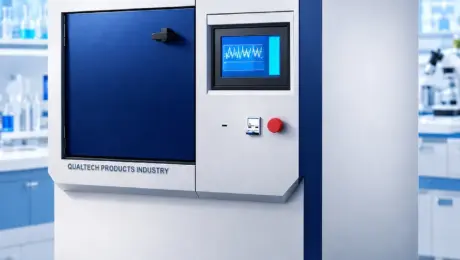
ASTM and ISO Xenon Arc Weathering Test Methods Using the Professional Automatic Xenon Test Chamber QPI-XEN6800 Accelerated Xenon Arc Weathering and Light Exposure Testing Accelerated xenon arc testing is used to investigate how materials, coatings, plastics, pigments and finished products respond to prolonged exposure to light and controlled environmental conditions. Natural exposure can gradually produce…
- Published in ASTM Test Standards, ISO Test Standards, Science and Research
ASTM D5420 – 21: Assessing Impact Resistance in Rigid Plastics
Plastic materials are everywhere in modern life, from safety equipment to building materials to consumer products. These materials need to withstand sudden impacts without breaking or cracking. ASTM D5420-21 is a standardized test method that measures how well flat, rigid plastic specimens resist damage when struck by a falling weight, helping manufacturers ensure their products…
- Published in ASTM Test Standards, Science and Research
ASTM D1331-20 Standard Test Method for Surface and Interfacial Tension of Solutions of Surface-Active Agents: Specific Use and Industry Relevance
Surface tension measurements play a crucial role in evaluating how well cleaning agents, detergents, and other surface-active materials perform in real-world applications. ASTM D1331-20 provides a standardized method for measuring both surface tension and interfacial tension of solutions containing surfactants, giving manufacturers and researchers reliable data to assess product quality and effectiveness. This test method…
- Published in ASTM Test Standards, Science and Research
ASTM D1084: Standard Test Methods for Viscosity of Adhesives Explained
ASTM D1084 measures the flow properties of adhesives to help manufacturers determine how well these materials will perform during application and bonding processes. This test standard evaluates viscosity using rotational methods, providing critical data that affects everything from manufacturing efficiency to final bond strength. Understanding an adhesive’s viscosity helps you predict how it will spread,…
- Published in ASTM Test Standards, Science and Research
ASTM D562 Standard Test for Paints KU Viscosity — Purpose, Use, and Industry Impact
Paint manufacturers and quality control professionals rely on precise viscosity measurements to ensure their products meet performance standards and application requirements. ASTM D562 provides a standardized method for measuring paint consistency using Krebs Units (KU) with a Stormer-type viscometer, giving you reliable data to control product quality and optimize formulations. This test method specifically evaluates…
- Published in ASTM Test Standards, Science and Research
ASTM G133 — Linearly Reciprocating Ball-on-Flat Sliding Wear: Specific Use and Industry Insights
Manufacturing companies and research labs need reliable ways to measure how materials wear down when they slide against each other. ASTM G133 provides a standardized method to test sliding wear by moving a ball back and forth across a flat surface while measuring both wear rates and friction forces. This test helps engineers choose the…
- Published in ASTM Test Standards, Science and Research
ASTM G99 — Pin-on-Disk Wear Test: Purpose, Use, and Industry Impact
ASTM G99 provides a standard method for measuring how materials wear against each other using a pin-on-disk setup that also tracks friction during testing. This test helps engineers and material scientists understand how different materials will perform when they rub against each other in real-world applications. You get both wear rate data and friction coefficient…
- Published in ASTM Test Standards, Science and Research
ASTM D2534 — COF (and Abrasion) of Wax Coatings: Applications & Use
Wax coatings protect countless products from automotive finishes to furniture surfaces, but their effectiveness depends on two critical factors: slip resistance and durability under wear. ASTM D2534 provides manufacturers and quality control professionals with a standardized method to measure both the coefficient of friction (COF) and abrasion resistance of wax coatings, ensuring these protective treatments…
- Published in ASTM Test Standards, Science and Research
ASTM F609 — COF Using a Horizontal Pull Slipmeter: Purpose & Use
When you need to test how slippery a walking surface is, ASTM F609 provides a reliable method to measure the coefficient of friction using a Horizontal Pull Slipmeter. This test helps you determine if floors, sidewalks, and other walkway surfaces are safe for people to walk on without slipping. The test works by pulling a…
- Published in ASTM Test Standards, Science and Research
ASTM D2047 — Static COF of Polish-Coated Floors: Specific Use & Impact
Slip resistance is a critical safety factor for any polished floor surface, especially in commercial and industrial settings. ASTM D2047 provides a standardized method to measure the static coefficient of friction (COF) on polish-coated floors using the James Machine, giving you reliable data to assess slip hazards before accidents occur. This test method helps facility…
- Published in ASTM Test Standards, Science and Research
 English
 Danish
 Dutch
Dutch Finnish
 French
 German
 Greek
Greek Irish
Irish Italian
 Luxembourgish
 Norwegian
 Norwegian
 Portuguese
 Scottish Gaelic
 Spanish
 Welsh
Welsh