





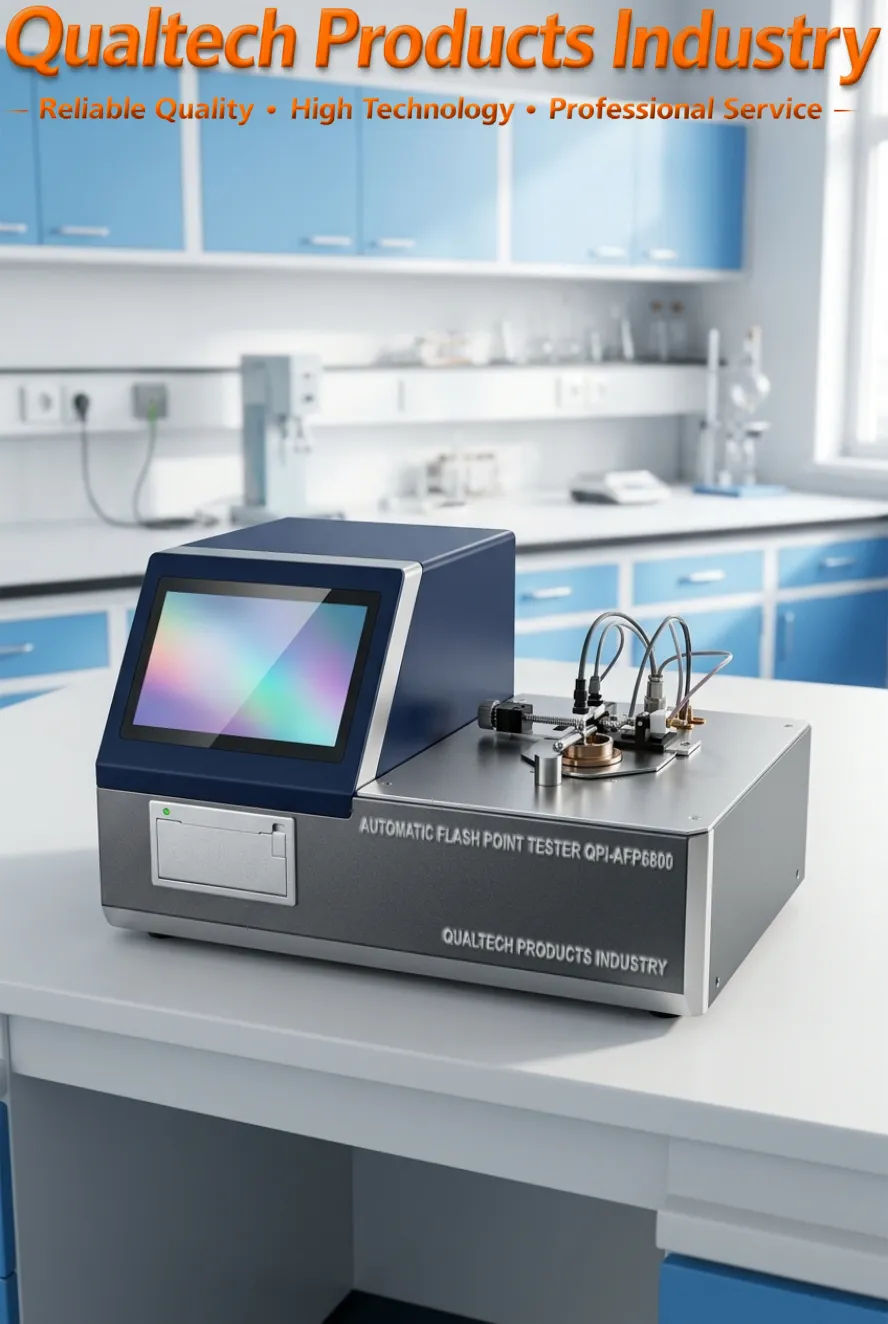
Product Description:
Qualtech Products Industry Rapid Equilibrium Closed Cup Flash Point Analyzer is engineered in accordacne with a wide range of recognized Test Standards including EN ISO 3679, ASTM D3828, ASTM D3278, ISO 3680, EN 456, EN ISO 1516, EN ISO 1523 delivering High-Precision Thermodynamics Analysis in a 2 mL Micro-Sample Footprint.
Stop burning through 70 mL of volatile reagents and waiting 30 minutes per run. Engineered for analytical chemists, aerospace fuel engineers, scientists and university research labs, the Automatic Rapid Equilibrium Closed Cup Flash Point Analyzer QPI-AFP Series brings sub-degree thermal control and rapid-equilibrium speed to flash point determination across -30°C to +80°C (Model QPI-AFP6800) and high-temperature configurations with RT to +300°C (Model QPI-AFP54800).
Engineered integrating a Closed Loop High Precision Thermal System with advanced dynamic power-switching algorithms, the Automatic Closed Cup Flash Point Tester QPI-AFP Series eliminates thermal overshoot and reaches equilibrium rapidly - delivering repeatable flash/no-flash and exact flash point results using just 2 mL of sample.
How Rapid Equilibrium Testing Works
Instead of slowly ramping a large volume of liquid and chasing thermal lag, the Automatic Closed Cup Flash Point Analyzer QPI-AFP6800 locks the sealed test cup at your target temperature first:
- Inject & Equilibrate: Introduce a precise 2 mL aliquot into the pre-conditioned closed cup.
- Automated Ignition: Once thermal equilibrium is reached, the motorized cover actuates automatically and triggers the electronic igniter—no open gas lines or external pilot flames required.
- Iterate with Zero Cross-Contamination: Fresh 2 mL aliquots are tested across stepped temperature points until the exact flash threshold is bracketed to within ±0.1°C display resolution.
Key Engineering Features
- Hybrid Thermoelectric & External Loop Cooling: Combines internal solid-state Peltier cooling with external compressor circulation support to pull test temperatures down to -30°C rapidly and hold rock-steady stability.
- Large Color Touchscreen Display: Real-time thermal curve tracking, programmable heating rates, and customizable ignition intervals in an intuitive lab-ready interface.
- Fully Automated Testing & Electronic Ignition: Eliminates operator timing variance and removes hazardous gas plumbing from the fume hood.
- Built-In Data Logging & Thermal Mini Printer: Integrated Memory stores historical test records onboard and outputs instant, analysis-ready test slips via the integrated Mini Thermal Printer.
- 2 mL Micro-Sample Economy: Drastically cuts sample consumption, VOC exposure and hazardous waste disposal costs for expensive fragrances, aviation fuels, solvents, paints, adhesives and specialty polymers.
Ideal Applications
- Aerospace & Fuels: Jet fuel, aviation turbine fuel, kerosene, and diesel cut verification (ASTM D3828 / EN ISO 3679).
- Coatings, Paints & Adhesives: Rapid VOC and flammability classification of paints, enamels, lacquers, varnishes, and resins (ASTM D3278 / EN ISO 1523).
- Chemical & Academic R&D: Solvents, flavors, fragrances, essential oils, and hazardous waste ignitability screening where sample volume is scarce and turnaround time matters.
This Automatic Rapid Equilibrium Closed Cup Flash Point Analyzer QPI-AFP is designed and engineered in accordance with a wide range of recognized Test Standards including:
- ASTM D3828 (Standard Test Methods for Flash Point by Small Scale Closed Cup Tester)
- ASTM D3278 (Standard Test Methods for Flash Point of Liquids by Small Scale Closed-Cup Apparatus)
- EN ISO 1516 (Determination of flash/no flash — Closed cup equilibrium method)
- EN ISO 1523 (Determination of flash point — Closed cup equilibrium method)
- EN ISO 3679 (Determination of flash point – Method for flash no-flash and flash point by small scale closed cup tester)
- DIN EN ISO 3680 (Determination of flash/no flash — Rapid equilibrium closed cup method)
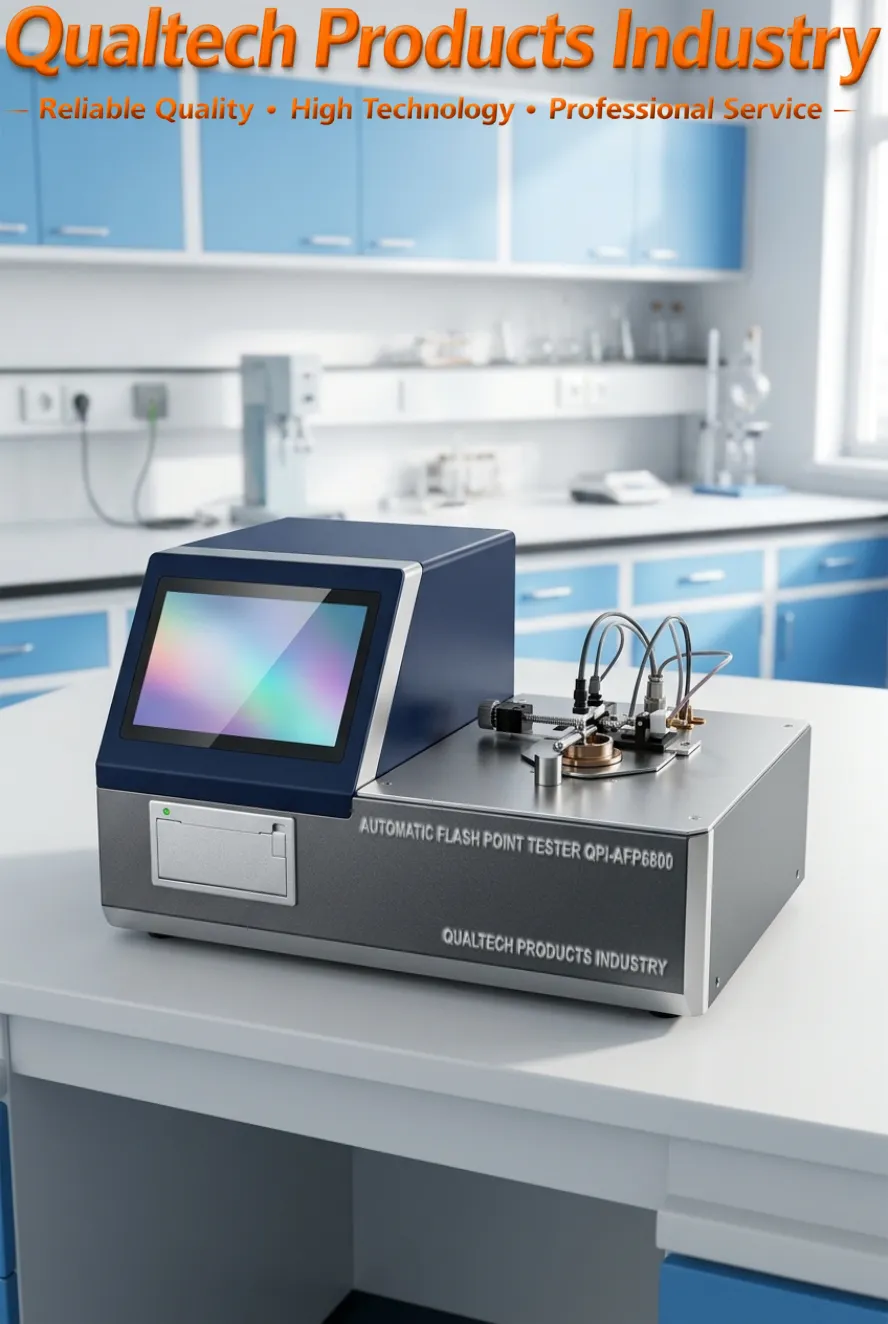
Automatic Rapid Equilibrium Closed Cup Flash Point Analyzer QPI-AFP6800 - Applications:
In industrial quality control, regulatory compliance, and chemical formulation, determining the exact flash point of a liquid is one of the most critical safety and classification metrics. Whether classifying flammable liquids for global transport (ADR, IATA, IMDG, GHS/CLP), verifying jet fuel specifications, or formulating low-VOC coatings, laboratories depend on harmonized international test methods. Modern small-scale equilibrium instruments - such as the Automatic Rapid Equilibrium Closed Cup Flash Point Analyzer QPI-AFP6800 - have transformed how engineers execute these standards by replacing slow, large-volume heating methods with rapid, sub-degree thermal equilibrium testing using just 2 mL of sample.
Below is a technical breakdown of the six core European and North American standards supported by the Automatic Flash Point Analyzer QPI-AFP6800, how they relate to one another, and how rapid equilibrium instrumentation streamlines compliance.
Why Rapid Equilibrium Closed Cup Testing Matters
Traditional flash point apparatuses (such as Pensky-Martens or Tag closed cup testers) require 50 mL to 75 mL of sample and slowly ramp the temperature until vapor ignition occurs. That approach consumes expensive reagents, generates significant hazardous waste, and introduces thermal lag between the heating block and the liquid sample.
By contrast, rapid equilibrium closed cup methodology locks the test chamber at a pre-selected target temperature first. When a 2 mL aliquot is injected into the sealed cup, the low thermal mass reaches vapor-liquid equilibrium within one to two minutes. An automated lid opens and an electronic igniter triggers to verify whether a flash occurs. Because the QPI-AFP6800 combines internal solid-state Peltier cooling with external circulation support across a temperature range of -30°C to +80°C (and custom high-temperature configurations up to +300°C), laboratories can execute both sub-ambient and elevated flash point determinations on a single compact benchtop unit.
Core International Standards Explained
1. EN ISO 3679 - Determination of Flash No-Flash and Flash Point (Rapid Equilibrium Closed Cup Method)
EN ISO 3679 is the primary European and international benchmark for rapid equilibrium small-scale closed cup flash point testing. It applies broadly to paints (including water-borne paints), varnishes, paint binders, adhesives, solvents, petroleum products, and related liquids across a temperature range of -30°C to +300°C. The standard defines two distinct operational modes: a pass/fail flash/no-flash test at a specified regulatory threshold temperature (ideal for transport hazard classification) and a stepped sequential procedure to pinpoint the exact flash point temperature within tight repeatability limits.
2. ASTM D3828 - Standard Test Methods for Flash Point by Small Scale Closed Cup Tester
ASTM D3828 is the North American technical counterpart to EN ISO 3679 and is heavily specified across the petroleum, aviation turbine fuel, and petrochemical industries. Using a 2 mL or 4 mL sample depending on the target temperature range, ASTM D3828 establishes strict tolerances for cup temperature stability, equilibration dwell times, and ignition verification. On the QPI-AFP6800, automated lid actuation and programmable electronic ignition eliminate manual timing variance, allowing fuel laboratories to screen aviation fuels, kerosene, and distillate cuts with repeatable < 2°C precision.
3. ASTM D3278 - Standard Test Methods for Flash Point of Liquids by Small Scale Closed-Cup Apparatus
While ASTM D3828 focuses primarily on fuels and petrochemicals, ASTM D3278 is tailored specifically for paints, enamels, lacquers, varnishes, resins, and viscous coating formulations. Viscous and multi-component polymer mixtures can trap volatile solvents and exhibit uneven heat transfer in conventional large-cup testers. ASTM D3278 solves this by specifying rapid equilibrium thermal conditioning on a 2 mL micro-sample, preventing skin formation and solvent boil-off before the test flame or electronic igniter is introduced.
4. ISO 3680 - Determination of Flash/No Flash (Rapid Equilibrium Closed Cup Method)
ISO 3680 originally served as the dedicated international standard for rapid equilibrium pass/fail flash/no-flash testing before its technical provisions were merged into the unified EN ISO 3679 standard. Even though ISO 3679 now supersedes it, ISO 3680 remains explicitly referenced in legacy product specifications, multinational chemical safety data sheets (SDS), and long-standing regulatory procurement contracts. Because the QPI-AFP6800 maintains full protocol compatibility with ISO 3680 equilibrium parameters, laboratories can satisfy historical audit requirements without maintaining separate instrumentation.
5. EN ISO 1516 - Determination of Flash/No Flash (Closed Cup Equilibrium Method)
EN ISO 1516 governs closed cup equilibrium pass/fail testing specifically within the paints, varnishes, and allied coatings sector. Unlike rapid small-scale methods that operate strictly on 2 mL aliquots, EN ISO 1516 defines the broader equilibrium closed-cup framework used across European coating manufacturers to verify whether a batch complies with flammability storage and transport thresholds (such as the 23°C and 60°C GHS/CLP classification cutoffs). Performing preliminary and routine screening on the QPI-AFP6800 enables coating chemists to verify compliance in minutes while reserving larger reference vessels only when required.
6. EN ISO 1523 - Determination of Flash Point (Closed Cup Equilibrium Method)
Paired directly with EN ISO 1516, EN ISO 1523 specifies the equilibrium closed cup procedure for determining the exact numerical flash point of paints, varnishes, binders, and solvents rather than a simple pass/fail threshold. By maintaining true thermal equilibrium between the liquid phase and the vapor space above it prior to ignition, EN ISO 1523 prevents false high readings caused by rapid heating rates. The QPI-AFP6800 mirrors this equilibrium philosophy with closed-loop PID power switching and ±0.1°C display resolution.
Quick Reference Comparison Table
| Standard | Region / Body | Primary Industry Scope | Test Mode |
|---|---|---|---|
| EN ISO 3679 | Europe / ISO | Paints, solvents, petroleum, chemicals (-30°C to +300°C) | Flash/No-Flash & Exact Flash Point |
| ASTM D3828 | North America / ASTM | Aviation fuels, petroleum distillates, hydrocarbons | Flash/No-Flash & Exact Flash Point |
| ASTM D3278 | North America / ASTM | Paints, enamels, lacquers, varnishes, viscous resins | Flash/No-Flash & Exact Flash Point |
| ISO 3680 | ISO (Legacy) | Paints, varnishes, petroleum & related liquids | Pass/Fail Flash/No-Flash |
| EN ISO 1516 | Europe / ISO | Paints, varnishes, binders, coating formulations | Equilibrium Flash/No-Flash |
| EN ISO 1523 | Europe / ISO | Paints, varnishes, binders, solvents | Equilibrium Exact Flash Point |
Streamlining Multi-Standard Compliance in the Lab
For global manufacturers shipping formulations across both European and North American markets, running separate instruments for ASTM and EN ISO protocols wastes bench space and slows batch release. By combining automated lid actuation, gas-free electronic ignition, sub-zero Peltier cooling, onboard storage for 200 test records, and an integrated thermal printer, the Automatic Rapid Equilibrium Closed Cup Flash Point Tester QPI-AFP6800 consolidates multi-standard flash point verification into a single repeatable workflow—delivering regulatory confidence in under two minutes per test delivering high-accuracy, high-precision, user-friendly application, user-friendly menu navigation, compliance and much more.
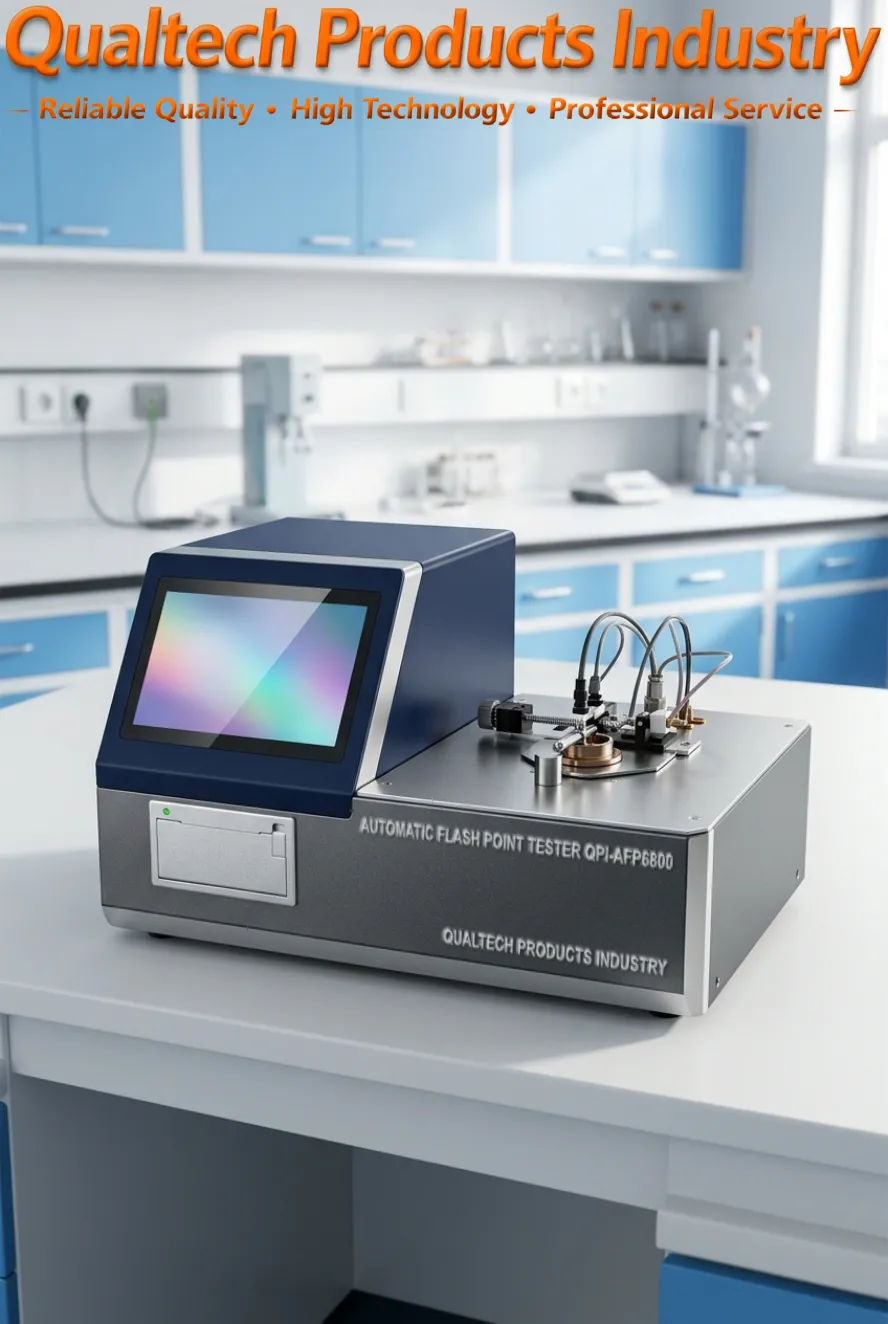
Automatic Precision Flash Point Analyzer - Features:
- Newest Microchip Technology: High-speed closed loop microprocessor control with dynamic power-switching algorithms for zero thermal overshoot and rapid equilibrium stabilization
- Large Color Touchscreen Display: Intuitive large Color Touchscreen Display featuring real -time thermal curve tracking, programmable heating rates and one touch method selection
- Automatic Flash Point Measurement: Fully automated test execution - from thermal conditioning and equilibration dwell timing to motorized lid actuation and flash detection
- Automatic Sample Air Pressure Measurement: Built-in high-precision barometric pressure sensor continuously monitors ambient atmospheric pressure during every test run
- Automatic Temperature Compensation: Real-time barometric pressure correction automatically adjusts and normalizes measured flash point readings to standard atmospheric pressure
- High-Precision Sample Temperature Sensors: High-Speed & High-Precision Temperature Sensors delivering ±0.1°C display resolution and tight repeatability across -30°C to +80°C (Model QPI-AFP6800) or RT +300°C (Model QPI-AFP5800)
- Advanced Ignition System with Electronic Ignition: Automatic ignition architecture supporting clean, gas-free electronic ignition for complete laboratory safety and convenience
- Hybrid Internal & External Automatic Cooling System: Internal Automatic Cooling System paired with external compressor circulation support for rapid sub-ambient cooldowns and rock-steady thermal holding
- Automatic Calibration: Guided multi-point temperature and sensor calibration routines ensuring long-term metrological traceability and audit readiness
- Integrated Direct Printing & Data Memory: Built-in Automatic Mini Printer for instant test slips, backed by onboard storage for historical test records
- Precision-Engineered Brass Cup: CNC-machined, corrosion-resistant Brass Sample Test Cup engineered for uniform heat transfer and strict dimensional compliance with micro-sample (2 mL / 4 mL) standards.
- User-Friendly Application: Clean, structured operator workflow with customizable ignition intervals, preset standard methods and minimal operator training required
- User-Friendly Menu Navigation: Clean, structured Menu Navigation with easy test programming
- User-Friendly Sample Handling: Rapid 2 mL micro-sample syringe injection minimizes reagent consumption, slashes VOC exposure and simplifies post-test cup cleaning
- Integrated Safety Features: Over-temperature protection, automated lid closure immediately upon flash detection, flame-arresting cup geometry and built-in fault diagnostics
- High Accuracy & High Precision: Delivers < 2°C same-operator repeatability and < 3°C inter-operator reproducibility in full compliance with equilibrium test tolerances
- Ergonomic Design: Compact, space-saving benchtop footprint with an angled touchscreen and front-access printer and test cup assembly
- Reliable Performance: Industrial-grade high-precision electronic and mechanical components engineered for continuous daily operation in demanding QC and R&D environments
- Engineered in Accordance with International Test Standards: Fully compliant with EN ISO 3679, ASTM D3828, ASTM D3278, ISO 3680, EN ISO 1516 and EN ISO 1523
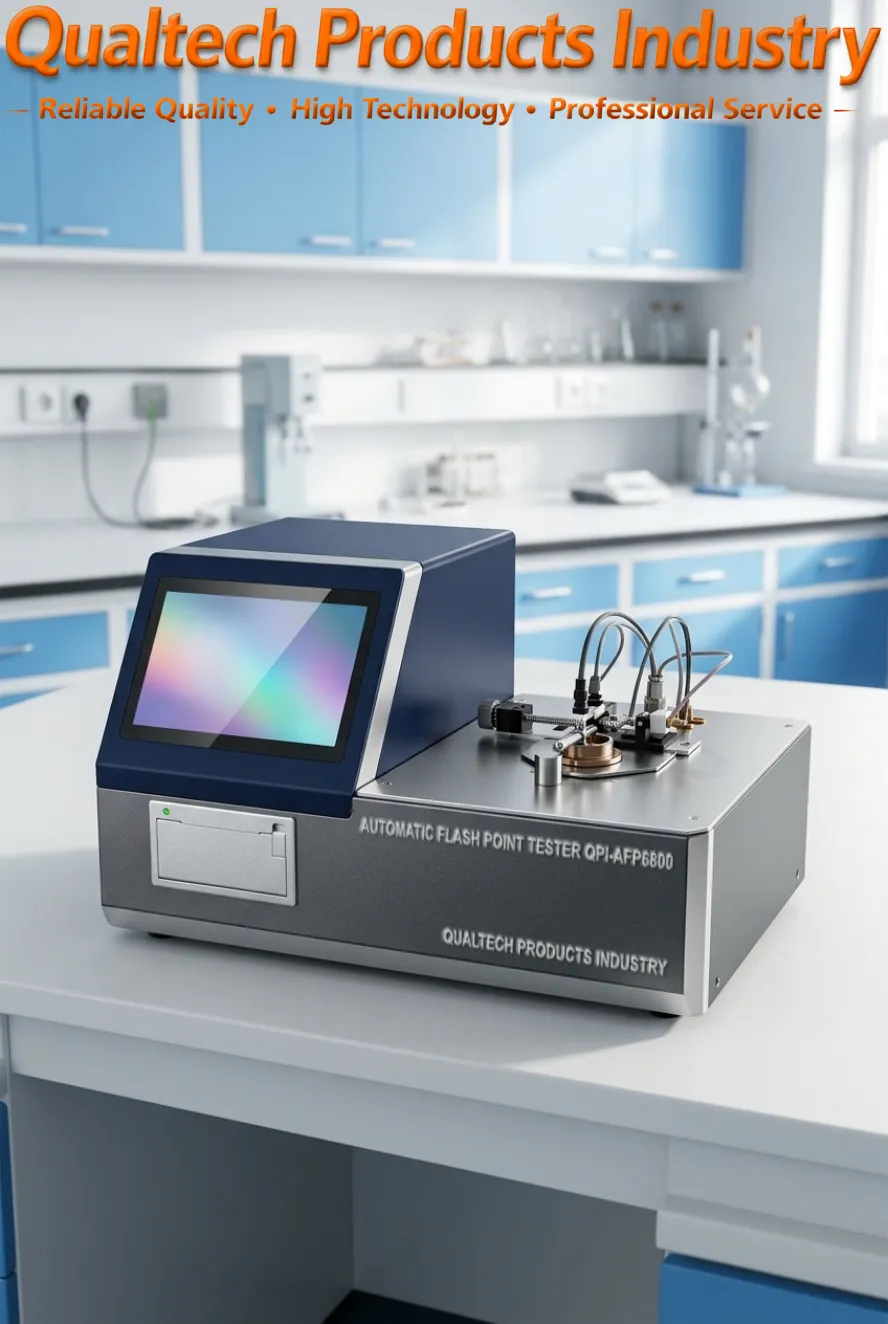
Automatic Rapid Equilibrium Closed Cup Flash Point Tester – Specifications:
| Model | QPI-AFP5800 | QPI-AFP6800 |
|---|---|---|
| Newest Microchip Technology | Yes | Yes |
| Automatic Flash Point Analysis | Yes | Yes |
| Measurement Temperature Range | RT - 300°C | -30°C - 80°C |
| Accuracy | ≤2°C | ≤2°C |
| Temperature Resolution | 0.1°C | 0.1°C |
| Sample Size | 2ml | 2ml |
| User-friendly Application | Yes | Yes |
| User-friendly Menu Navigation | Yes | Yes |
| User-friendly Sample Handling | Yes | Yes |
| Data Storage | Yes | Yes |
| Mini Printer | Yes | Yes |
| Integrated Safety Features | Yes | Yes |
| High Accuracy & High Precision | Yes | Yes |
| Ergonomic Design & Reliable Performance | Yes | Yes |
| Voltage | 110V 60Hz and 220V 50Hz | 110V 60Hz and 220V 50Hz |
| Engineered in accordance with international test standards including ASTM D327, ASTM D3828, ASTM D3278, DIN EN ISO 1516, DIN EN ISO 1523, DIN EN ISO 3679, DIN EN ISO 3680 | ||
Automatic Rapid Equilibrium Closed Cup Flash Point Tester – Included items:
- Automatic Rapid Equilibrium Closed Cup Flash Point Tester
- Accessories
- Quality Certificate
- Carefully Calibrated
- Calibration Certificate
- User manual
- Extended Warranty
- Lifetime Support
Get information now on products, pricing, technical support and professional services.
One of our specialists will reply to your enquiry shortly. Alternatively contact us via the company details in the USA, in Australia or in the UK.














 English
 Danish
 Dutch
 Finnish
 French
 German
 Greek
 Irish
 Italian
 Luxembourgish
 Norwegian
 Norwegian
 Portuguese
 Scottish Gaelic
 Spanish
 Welsh