




Produktbeschreibung:
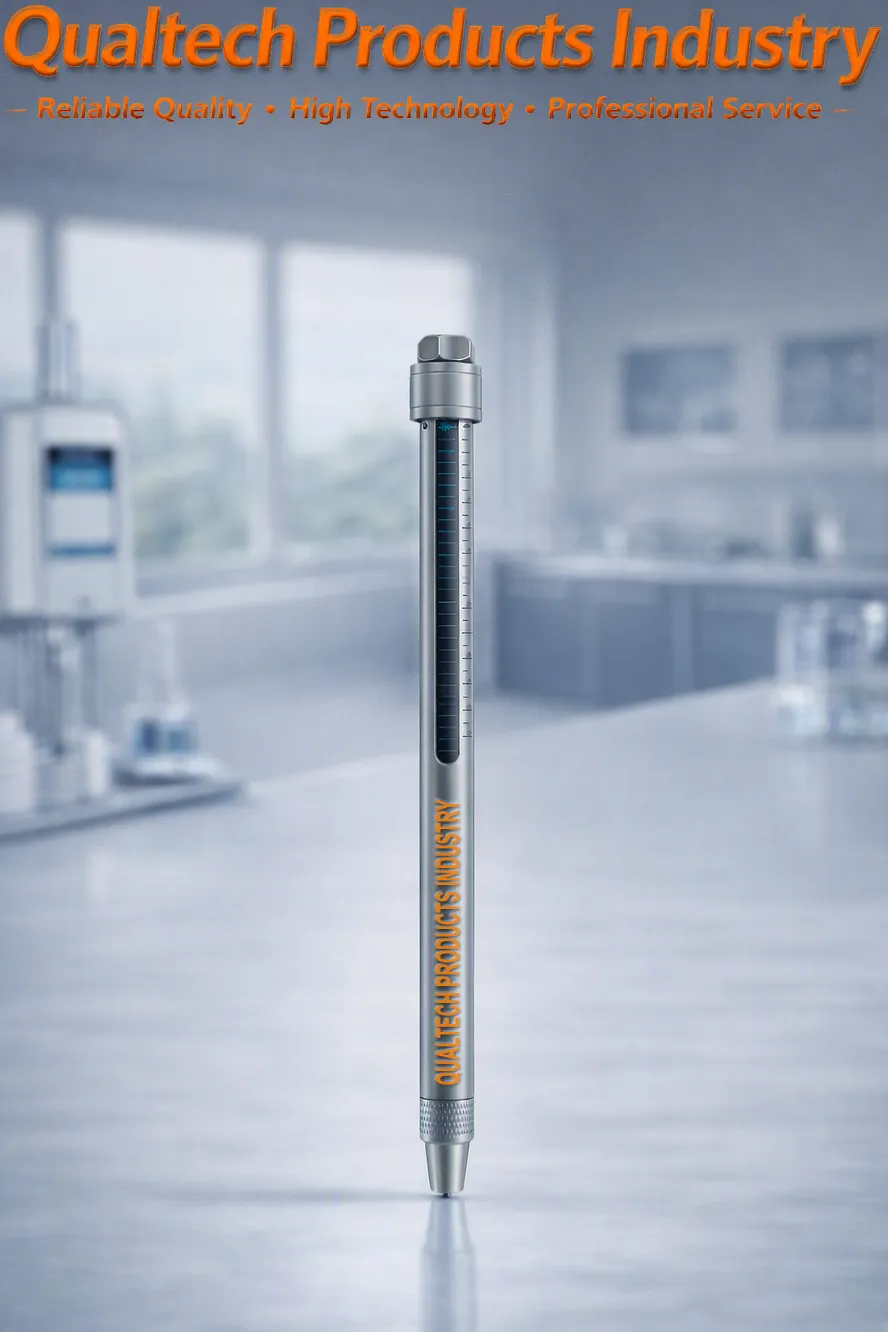
Qualtech-Produkte – Industrie Präzisions-Sklerometer ist ein Profi Härteprüfstift nach DIN 55656 und ISO 1518 um sofort die Härte, das Verschleißfestigkeit und die Kratzfestigkeit von Lackfilme und Beschichtungen wird unterwegs an Probenoberflächen und Substraten befestigt.
Dieser Fachmann Härteprüfstift eignet sich für eine Vielzahl von Proben und Probenoberflächen, darunter ebene, konvexe und konkave Oberflächen unterschiedlicher Größe.
Die Sklerometer-Härteprüfung Dies erfolgt durch Einstellen der Härte der Stiftspitze mithilfe des stufenlos einstellbaren Härte-Drehreglers. Nach Auswahl der Härte wird mit der Stiftspitze bei einer Geschwindigkeit von ca. 10 mm/s eine Linie mit einer Länge von etwa 10 mm auf die Beschichtungs- oder Probenoberfläche aufgebracht. Diese Markierung wird visuell auf Kratzer oder Beschädigungen in der Oberflächenbeschichtung oder auf der Probenoberfläche untersucht, um den Härtegrad der Beschichtung oder der Probenoberfläche sofort zu bestimmen.
Diese Präzision DIN 55656 Härte-Ritzstift wurde entwickelt, um die Mechanische Festigkeit, das Oberflächenhärte und die Kratzfestigkeit von Oberflächenbeschichtungen für Forschung und Qualitätsmanagement in Ihrem Labor und unterwegs.
Je nach den spezifischen Prüfanforderungen wird eine Vielzahl verschiedener Prüfverfahren zur Messung der Härte der Beschichtung und Kratzfestigkeit der Beschichtung. Eine der am häufigsten verwendeten Prüfverfahren ist das Härteprüfung nach DIN 55656, das Härteprüfung mit dem Härtestift.
Dieser Fachmann DIN 55656 und ISO 1518 Sklerometer-Taschenstift ist so konzipiert und konstruiert, dass es ein präzisionsgefertigtes Federsystem in Kombination mit einer präzisionsgefertigten Stiftkratzspitze mit 0,5 mm, 0,75 mm und 1,0 mm Durchmesser, einen stufenlos einstellbaren Härtegrad, hochwertige Materialien, hohe Genauigkeit und Präzision, eine benutzerfreundliche Anwendung, eine benutzerfreundliche Probenhandhabung, eine Tragebox, ein ergonomisches Design, zuverlässige Leistung, Langlebigkeit und vieles mehr bietet.
Dieser professionelle Universal-Härteprüfstift nach DIN 55656 und ISO 1518 wurde gemäß internationalen Prüfnormen entwickelt und konstruiert, darunter:
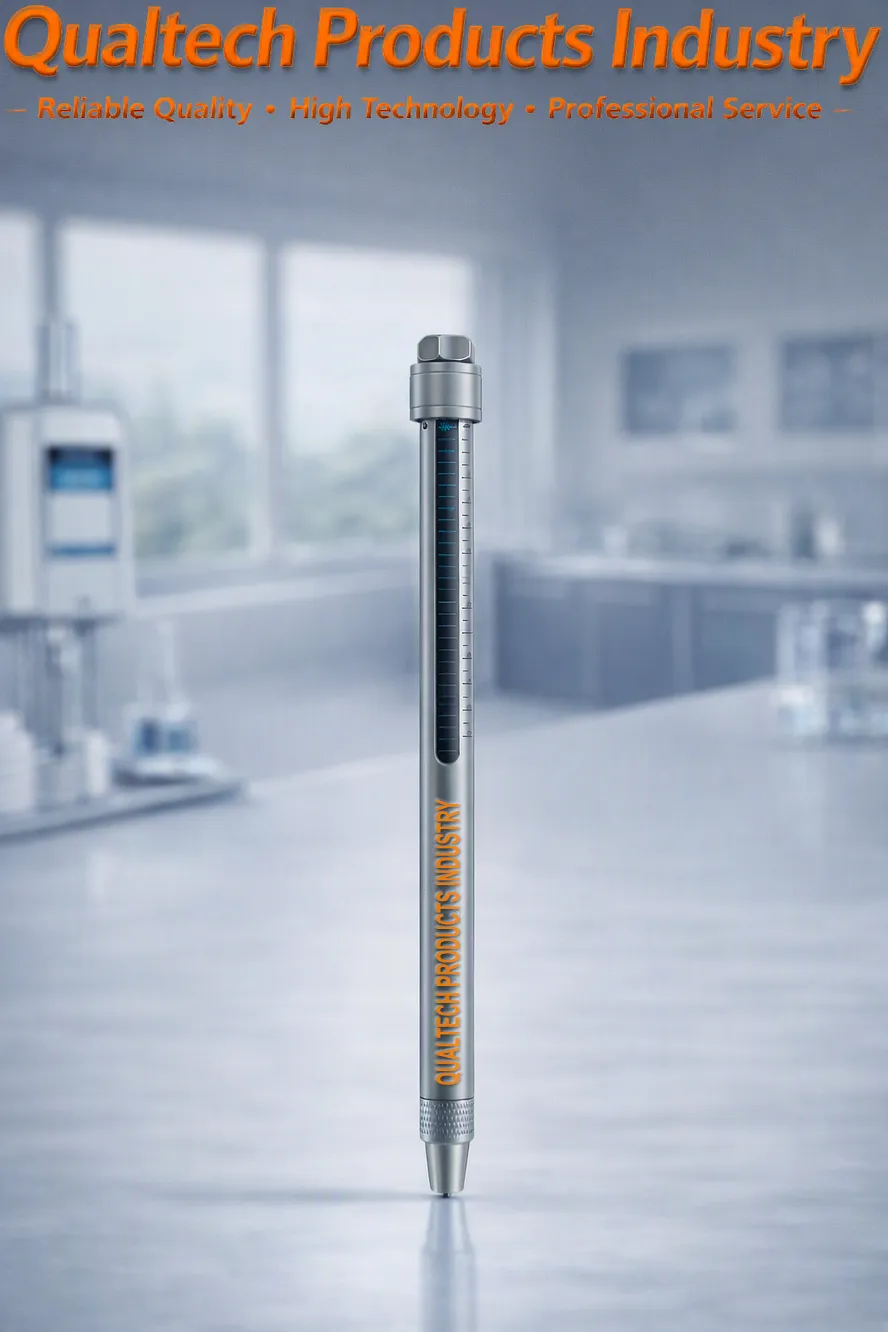
Präzisions-Sklerometerstift nach DIN und ISO - Test Applications:
1. DIN / ISO Test Method (DIN EN ISO 22557:2021)
DIN EN ISO 22557 is the primary international standard for scratch testing using a spring‑loaded hardness test pen. It is specifically designed for coatings, paints, varnishes, plastics, decorative surfaces, and automotive interior components.
Purpose of the Method
The test quantifies a coating’s resistance to localized mechanical damage, including:
surface scratching
metal marking
writing effects
fingernail‑like stresses
This makes it ideal for quality control of high‑value decorative and functional surfaces.
Testprinzip
A spring‑loaded scratch pen (like the QPI‑DINHP) is drawn across the surface at a controlled force. The stylus type and force determine the severity of the scratch.
ISO 22557 defines two methods:
Method A: carbide spherical stylus
Method B: disc stylus
The test force is adjustable between 0.5 N and 20 N, allowing precise evaluation of different coating systems.
Procedure Overview
Condition the test specimen according to ISO environmental requirements.
Select stylus type (spherical or disc) based on coating type.
Set the spring‑loaded force on the QPI‑DINHP.
Draw the stylus across the surface at constant speed.
Inspect the scratch under controlled lighting (ISO 13076).
Determine:
first visible continuous scratch
first perceptible scratch
rupture or breakthrough of coating
Engineering Interpretation
The DIN/ISO method is ideal for:
comparing coating systems
evaluating scratch sensitivity
validating surface modifications
automotive interior QC
decorative surface durability testing
It supports both pass/fail testing und progressive force testing.
2. ASTM Scratch Hardness Test Method (ASTM G171‑24)
ASTM G171 is the American standard for scratch hardness using a diamond stylus. It is widely used for metals, alloys, and some polymers.
Purpose of the Method
ASTM G171 measures a material’s resistance to permanent deformation caused by a single‑point indenter moving tangentially across the surface. It is particularly relevant for:
abrasion resistance
surface damage analysis
two‑body wear mechanisms
Testprinzip
A diamond stylus is pressed onto the surface under a defined normal load and moved at a low traversing speed to avoid frictional heating.
Unlike quasi‑static hardness tests, scratch hardness reflects permanent deformation after stylus removal, measured by residual scratch width.
Procedure Overview
Prepare the specimen to avoid catastrophic fracture or delamination.
Apply a controlled normal load to the diamond stylus.
Move the stylus at low speed across the surface.
Measure the residual scratch width.
Calculate the scratch hardness number.
Engineering Interpretation
ASTM G171 is ideal for:
metals and alloys
hard coatings
comparative abrasion studies
research and materials development
It provides a quantitative hardness value based on scratch geometry.
3. How the QPI‑DINHP Applies These Standards
DIN / ISO Mode (Primary Mode)
The QPI‑DINHP is engineered specifically for DIN EN ISO 22557 compliance:
adjustable spring‑loaded force
interchangeable spherical and disc stylus heads
controlled scratch path
stable ergonomics for repeatable results
This makes it ideal for coatings, plastics, decorative surfaces, and automotive interior components.
ASTM Mode (Comparative / Research Use)
While ASTM G171 uses a diamond stylus, the QPI‑DINHP can be used for comparative scratch resistance studies when equipped with a compatible stylus. It is not a full ASTM G171 instrument, but it supports:
controlled scratch force
controlled scratch path
residual scratch inspection
This allows engineers to perform pre‑screening oder comparative testing aligned with ASTM principles.
This Professional DIN Hardness Test Scratch Pen QPI‑DINHP is a precision instrument for evaluating scratch resistance according to DIN EN ISO 22557, the leading international standard for coatings and decorative surfaces. With adjustable test forces from 0.5 N to 20 N, interchangeable stylus types, and stable spring‑loaded mechanics, it delivers repeatable, laboratory‑grade scratch testing for paints, varnishes, plastics, automotive interior components, and high‑quality decorative finishes.
For research applications, the QPI‑DINHP also supports comparative scratch hardness evaluations aligned with ASTM G171, enabling engineers to assess abrasion resistance and surface durability across metals, alloys, and polymer systems.
This makes the QPI‑DINHP an essential precision test instrument for:
materials development
surface engineering
automotive interior QC
decorative coating validation
industrial quality control
Its robust construction, precise force control, and compliance with international standards ensure reliable, reproducible results favored by laboratories worldwide.
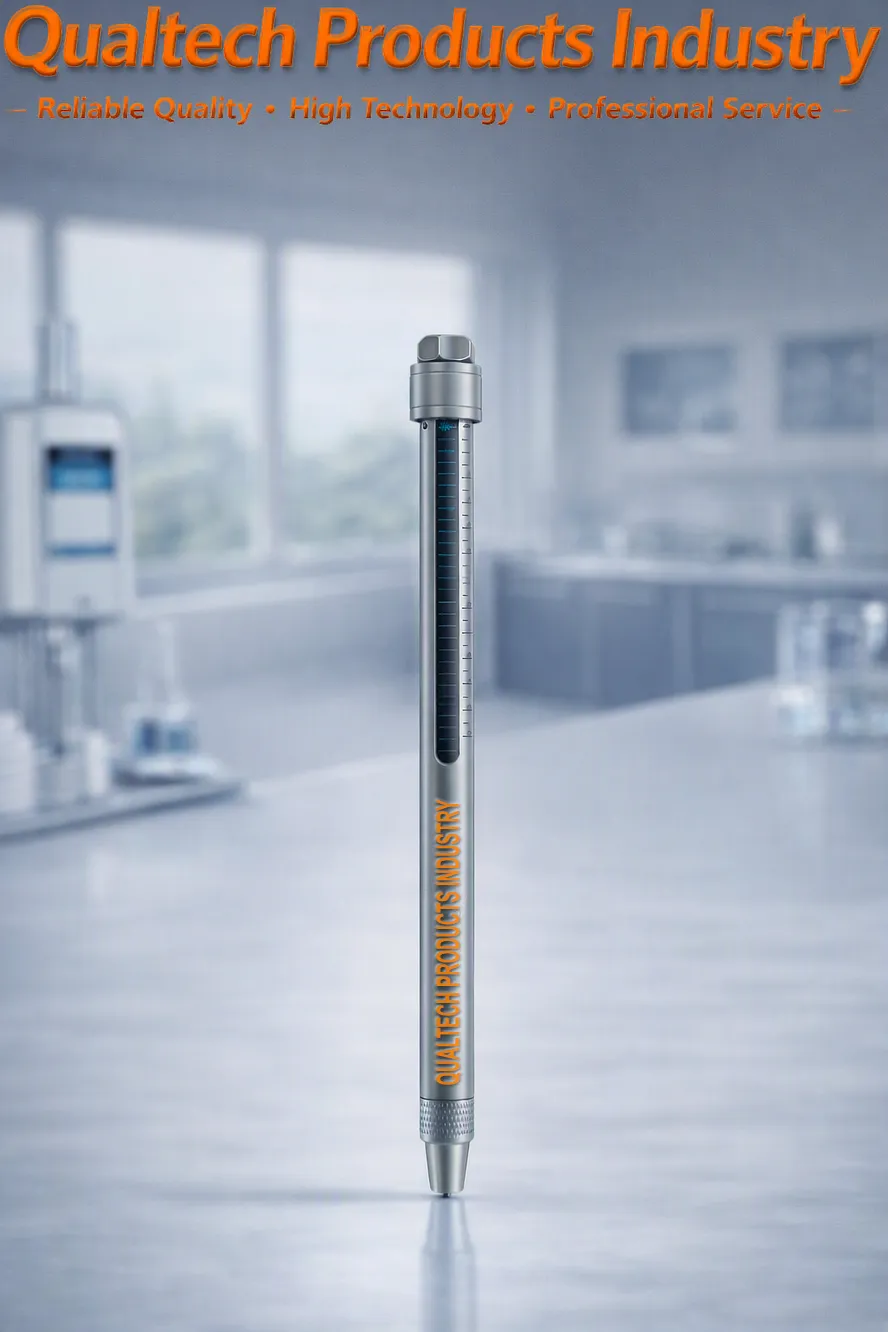
Präzisions-Sklerometerstift nach DIN und ISO - Funktionen:
- Neueste Technologie
- Sofortiger DIN 55656 Präzisions-Oberflächenkratztest
- Sofortiger ISO 1518 Präzisions-Oberflächenkratztest
- Stufenlos einstellbares Federsystem
- Präzisionsgefertigte Stiftkratzspitzen mit 0,5 mm, 0,75 mm und 1,0 mm Durchmesser
- Langlebige Stiftspitze aus hochwertigen Materialien, darunter Wolfram
- Präzisionsgefertigt und kalibriert
- Benutzerfreundliche Härtegradeinstellung mit drei Präzisionsfedern
- Benutzerfreundliche Anwendung
- Benutzerfreundliche Probenhandhabung
- Hohe Genauigkeit und hohe Präzision
- Ergonomisches Design und zuverlässige Leistung
- Entwickelt gemäß internationalen Prüfnormen, darunter DIN 55656 und ISO 1518
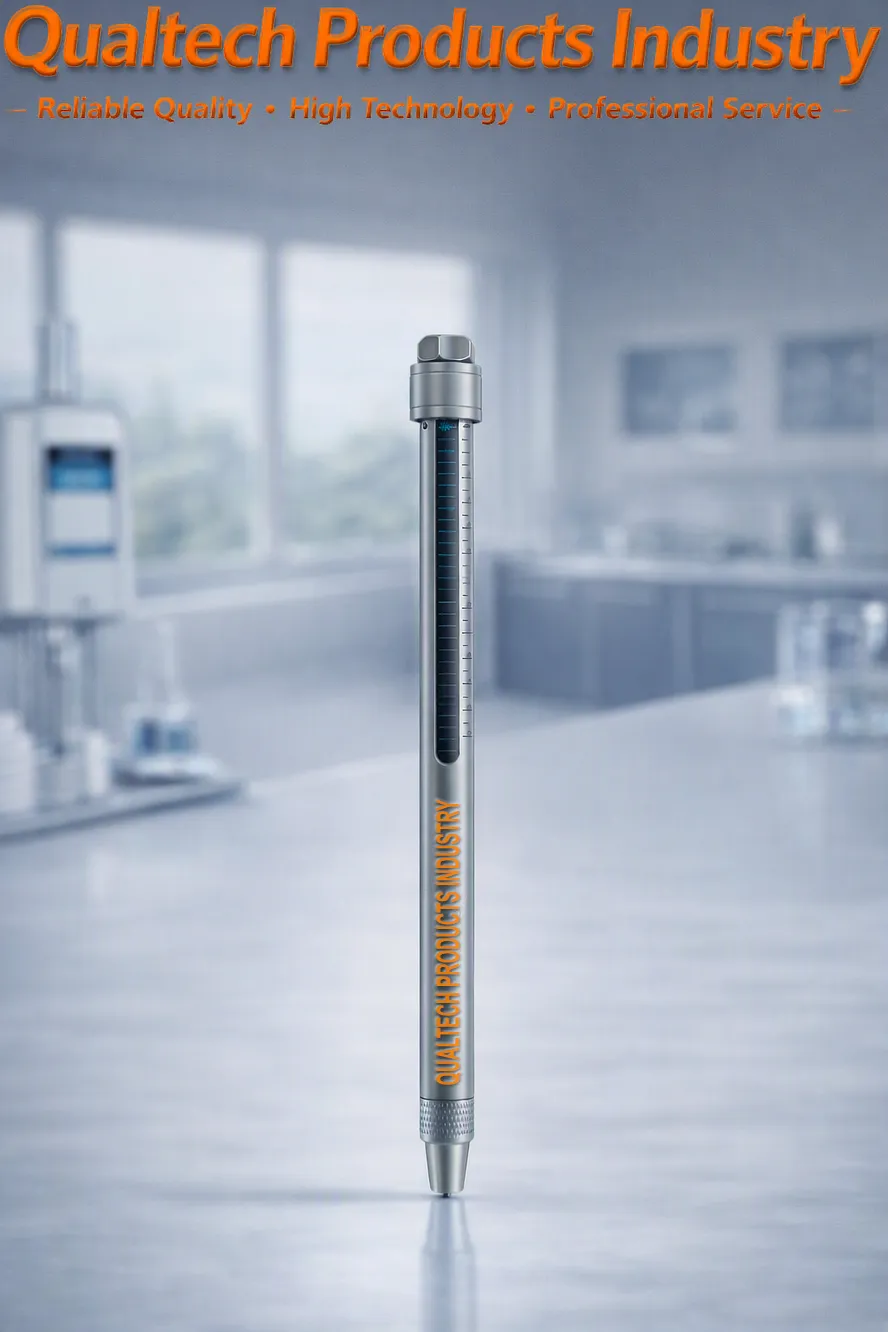
Präzisions-Sklerometer-Härteprüfstift – Spezifikationen:
| Modell | QPI-DINHP3800 | QPI-DINHP6800 |
|---|---|---|
| Neueste Technologie | Ja | Ja |
| Sofortige Oberflächenhärteprüfung nach DIN 55656 | Ja | Ja |
| Stufenlose Einstellung der Härte | Ja | Ja |
| Kratzstift | #1: Wolframkarbid-Stift #2: Wolframkarbid-Stift #3: Wolframkarbid-Stift #4: Federmechanik-Stift | |
| Anheften | Ø 0,75 mm, kugelförmig, Bosch | Ø 0,75 mm, kugelförmig, Bosch |
| Optionale Stifte | Ø 0,5 mm, kugelförmig, Opel Ø 1,0 mm, kugelförmig, ISO 1518 | |
| Federmechanik | 0N – 3N 0 N – 10 N 0 N – 20 N | |
| Zuverlässiges Federsystem | Ja | Ja |
| Präzisionsgefertigte Stiftspitze | Ja | Ja |
| Langlebige Stiftspitze | Ja | Ja |
| Präzisionsgefertigt und sorgfältig kalibriert | Ja | Ja |
| Hergestellt aus hochwertigen Materialien | Ja | Ja |
| Benutzerfreundliche Anwendung | Ja | Ja |
| Benutzerfreundliche Einstellung der Härtestufe | Ja | Ja |
| Benutzerfreundliche Probenhandhabung | Ja | Ja |
| Hohe Genauigkeit und hohe Präzision | Ja | Ja |
| Ergonomisches Design | Ja | Ja |
| Zuverlässige Leistung und Langlebigkeit | Ja | Ja |
| Entwickelt gemäß internationalen Prüfnormen, darunter DIN 55656 und ISO 1518 | ||
Professional DIN Hardness Pen - Available Accessories:
| Modell | Beschreibung |
|---|---|
| QPI-DINHP3800075 | Ø 0,75 mm, kugelförmig, von Bosch im Lieferumfang enthalten |
| QPI-DINHP6800075 | Ø 0,75 mm, kugelförmig, von Bosch im Lieferumfang enthalten |
| QPI-DINHP680005 | Ø 0,5 mm, kugelförmig, Bosch (optional) |
| QPI-DINHP680010 | Ø 1,0 mm, kugelförmig, ISO 1518 (optional) |
| QPI-DINHP38003N | Federmechanik 0N – 3N |
| QPI-DINHP380010N | Federkraft 0 N – 10 N |
| QPI-DINHP380020N | Federkraft 0 N – 20 N |
| QPI-DINHP68003N | Federmechanik 0N – 3N |
| QPI-DINHP680010N | Federkraft 0 N – 10 N |
| QPI-DINHP680020N | Federkraft 0 N – 20 N |
Precision DIN 55656 Hardness Pen – Im Lieferumfang enthalten:
- Präzisions-Ritzstift nach DIN- und ISO-Härte
- Zubehör
- Transportkiste
- Qualitätszertifikat
- Sorgfältig kalibriert
- Kalibrierzertifikat
- Bedienungsanleitung
- Erweiterte Garantie
- Lebenslanger Support
Informieren Sie sich jetzt über Produkte, Preise, technischen Support und professionelle Dienstleistungen.
Einer unserer Spezialisten wird Ihre Anfrage in Kürze beantworten. Alternativ können Sie uns auch über die Kontaktdaten unserer Niederlassungen in den USA, in Australien oder in Großbritannien kontaktieren.














 English
 Danish
 Dutch
Dutch Finnish
 French
 German
 Greek
Greek Irish
Irish Italian
 Luxembourgish
 Norwegian
 Norwegian
 Portuguese
 Scottish Gaelic
 Spanish
 Welsh
Welsh