



Product Description:
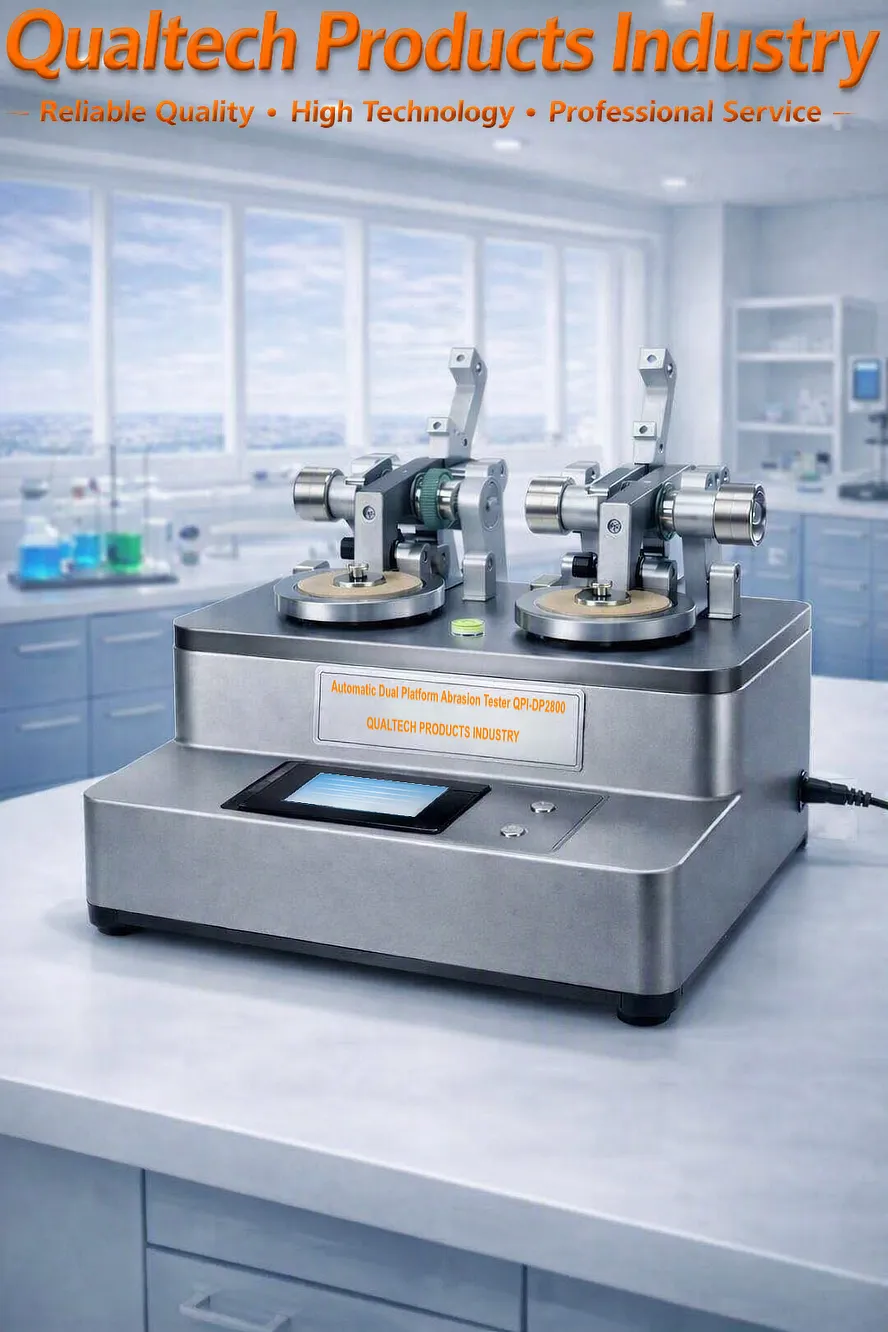
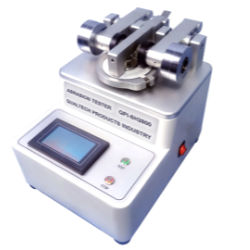
Qualtech Products Industry Dual Platform Abrasion Tester is a precision Rotary Abrasion Tester to perform automatic Accelerated Wear Tests on samples and sample surfaces by abrasion to instantly determine the resistance to dry abrasion at the touch of a button.
This professional Dual Rotary Rotary Abrasion Tester is suitable for a wide range of samples, sample surfaces, surface coatings and protective surface coatings including solid samples, coated surfaces, protective lacquers, protective surface coatings, electroplated surfaces, plastic-coated surfaces, textiles, leather, rubber, linoleum, laminated floor tiles, wood panels, ceramic tiles, metals and many more.
The Test Method for Abrasion Resistance is performed by mounting a sample onto the Sample Platform. The Sample Platform is a turntable which rotates the sample at a specified speed. During the rotation the sample is in direct contact with two specified Abrasive Wheels with a specified Test Load to determine the resistance to wear of the sample. The Abrasive Wear Action is achieved with the two specified Abrasive Wheels rotating in opposite directions set and kept in motion by a the rotating Sample Platform. The Abrading Wheels travel on the sample surface following a horizontal axis displaced tangentially from the axis of the test material which results in a sliding action. An exclusive feature of this Test Method for Abrasion Resistance is the “X” Pattern of Abrasion established by the rub-wear action of the Abrasive Wheels.
The rotary abrasion wear pattern formed on the sample surface is that of two intersecting areas or a slightly curved herringbone configuration from the outside to the center and from the center to the outside. During the Abrasion Test the sample surface is subjected to wear and abrasion and the material surface is abraded at all angles of grain or weave.
This professional automatic Dual Platform Rotary Abrasion Tester is designed and engineered offering the newest microchip technology combined with a large Color LCD Display, comfortable Sofftouch Buttons, advanced Dual Sample Platforms with individual Speed Control, Dual Sample Test System for side-by-side sample testing, Speed Control, advanced Constant Speed Technology, automatic Rotary Abrasion Test Programs, a wide range of available standardized and precision-engineered Abrasion Wheels, a wide range of standardized and carefully calibrated precision-engineered Test Loads, optional custom engineered Test Loads, user-friendly Sample Mount & Sample Swap System, user-friendly Abrasion Wheel Mount & Swap System, user-friendly Snap-In Test Load Mount & Swap System, advanced Platform Constant Speed Technology, individual continuous Platform Speed Control, optional Vacuum System, user-friendly Menu Navigation, user-friendly Application, user-friendly Sample Handling, High Accuracy and High Precision, an ergonomic Design, reliable Performance and much more.
The large Color LCD Display presents relevant Sample Test Data for automatic sample Abrasion Resistance Testing.
This professional Dual Rotary Turntable Abrasion Tester is designed and engineered in accordance with international test standards including:
- ASTM C501 (Standard Test Method for Relative Resistance to Wear of Unglazed Ceramic Tile by the Taber Abraser)
- ASTM C1353 (Standard Test Method for Abrasion Resistance of Dimension Stone Subjected to Foot Traffic Using a Rotary Platform Abraser)
- ASTM D1044 (Standard Test Method for Resistance of Transparent Plastics to Surface Abrasion)
- ASTM D3884 (Standard Guide for Abrasion Resistance of Textile Fabrics (Rotary Platform, Double-Head Method))
- ASTM D3389 (Standard Test Method for Coated Fabrics Abrasion Resistance (Rotary Platform Abrader))
- ASTM D4060 (Standard Test Method for Abrasion Resistance of Organic Coatings by the Taber Abraser)
- ASTM D5034 (Standard Test Method for Breaking Strength and Elongation of Textile Fabrics (Grab Test))
- ASTM D5035 (Standard Test Method for Breaking Force and Elongation of Textile Fabrics (Strip Method))
- ASTM D7255 (Standard Test Method for Abrasion Resistance of Leather (Rotary Platform, Double-Head Method))
- ASTM D6037 (Standard Test Methods for Dry Abrasion Mar Resistance of High Gloss Coatings)
- ASTM D-7255 (Standard Test Method for Abrasion Resistance of Leather (Rotary Platform, Double-Head Method))
- ASTM F362 (Standard Test Method for Determining the Erasability of Inked Ribbons)
- ASTM F510 (Standard Test Method for Resistance to Abrasion of Resilient Floor Coverings Using an Abrader with a Grit Feed Method)
- ASTM F1478 (Standard Test Method for Determination of Abrasion Resistance of Images Produced from Copiers and Printers (Taber Method))
- ASTM F1978 (Standard Test Method for Measuring Abrasion Resistance of Metallic Thermal Spray Coatings by Using the Taber Abraser)
- DIN 52347 (Testing Of Glass And Plastics; Abrasion Test; Method Using Abrasion Wheels And Measurement Of Scattered Light)
- DIN 53109 (Testing Of Paper And Board – Determination Of Abrasion By The Abrasion Wheel Method)
- DIN 53754 (Testing Of Plastics; Determination Of Abrasion, Abrasive Disk Method)
- DIN 53799 (Decorative Laminated Sheets On Basis Of Aminoplastic Resins; Test Method)
- DIN 68861-2 (Furniture Surfaces – Part 2: Behavior At Abrasion)
- ISO 10074 (Anodizing of aluminium and its alloys — Specification for hard anodic oxidation coatings on aluminium and its alloys)
- ISO 14656 (Epoxy powder and sealing material for the coating of steel for the reinforcement of concrete)
- ISO 24338 (Laminate floor coverings — Determination of abrasion resistance)
- ISO 3537 (Road vehicles — Safety glazing materials — Mechanical tests)
- ISO 4586-2 (High-pressure decorative laminates (HPL, HPDL) — Sheets based on thermosetting resins (Usually called Laminates) — Part 2: Determination of properties)
- ISO 5470-1 Rubber- or plastics-coated fabrics — Determination of abrasion resistance — Part 1: Taber abrader
- ISO 7784-1 (Paints and varnishes — Determination of resistance to abrasion — Part 1: Method with abrasive-paper covered wheels and rotating test specimen)
- ISO 7784-2 (Paints and varnishes — Determination of resistance to abrasion — Part 2: Method with abrasive rubber wheels and rotating test specimen)
- ISO 9352 (Plastics — Determination of resistance to wear by abrasive wheels)
- ANSI INCITS 322-2008 (Information Technology – Card Durability Test Methods)
- AS/NZS 1580.403.2:1994 (Paints and related materials – Methods of test – – Abrasion resistance – Taber abraser))
- AS/NZS 4266.2 (Reconstituted wood-based panels – Methods of test – Dimensions, squareness, flatness and edge straightness of whole panel)
- EN 13329 (Laminate floor coverings. Specifications, requirements and test methods)
- EN 13523-16 (Coil coated metals. Test methods. Resistance to abrasion)
- EN 14323 (Wood-based panels. Melamine faced boards for interior uses. Test methods)
- EN 14327 (Leather. Physical and mechanical tests. Determination of abrasion resistance of automotive leather)
- EN 14354 (Wood-based panels. Wood veneer floor covering)
- EN 14431 (Vitreous and porcelain enamels. Characteristics of the enamel coatings applied to steel panels intended for architecture)
- EN 14688 (Sanitary appliances. Wash basins. Functional requirements and test methods)
- EN 14864 (Vitreous and porcelain enamels. Enamel coatings applied to steel for writing surfaces. Specification)
- EN 1504-2 (Products and systems for the protection and repair of concrete structures. Definitions, requirements, quality control and evaluation of conformity. Surface protection systems for concrete)
- EN 438-2 (High-pressure decorative laminates (HPL). Sheets based on thermosetting resins (usually called laminates). Determination of properties)
- EN 660-2 (Resilient floor coverings. Determination of wear resistance. Frick-Taber test)
- DD ENV 13696 (Wood and parquet flooring. Determination of elasticity and resistance to wear)
- FORD BN108-02 (Ford Laboratory Test Method – Resistance To Abrasion – Taber Abraser)
- HNEMA LD 3 (High-Pressure Decorative Laminates (HPDL))
- NF Q 03-055 (Paper And Board Tests – Determination Of Abrasion Resistance Of Paper And Board (by The Taber Method))
- SAE J 1530 (Test Method for Determining Resistance to Fiber Loss, Resistance to Abrasion and Bearding of Automotive Carpet Material)
- SAE J1847 (Abrasion Resistance Testing-Vehicle Exterior Graphics and Pin Striping)
- SAE J365 (Method of Testing Resistance to Scuffing of Trim Materials)
- SAE J948 (Test Method for Determining Resistance to Abrasion of Automotive Bodycloth, Vinyl, and Leather, and the Snagging of Automotive Bodycloth)
- TAPPI T476 (Abrasion loss of paper and paperboard (Taber-type method), Test Method TAPPI/ANSI T 476 om-11)
- UNE 135203-1:2010 (Road Signalisation Equipment – Horizontal Signalisation – Materials – Laboratory Abrasion Tests – Part 1: Determination Of The Abrasion Resistance By Taber Method)
- UNE48250 (Paints And Varnishes – Abrasion Resistance – Taber Method)
- UNE56842 (Kitchen Furniture – Tests For Surfacing Materials)
- UNE 56843 (Kitchen Furniture – Physical Tests)
- UNE56868 (Bathroom Furniture – Physical Test Methods)
- UNE 57095 (Paper And Cardboard – Determination Of Abrasion Strength (Taber Method))
- ECCA T16
- GM 9515P
- SIS SS923509
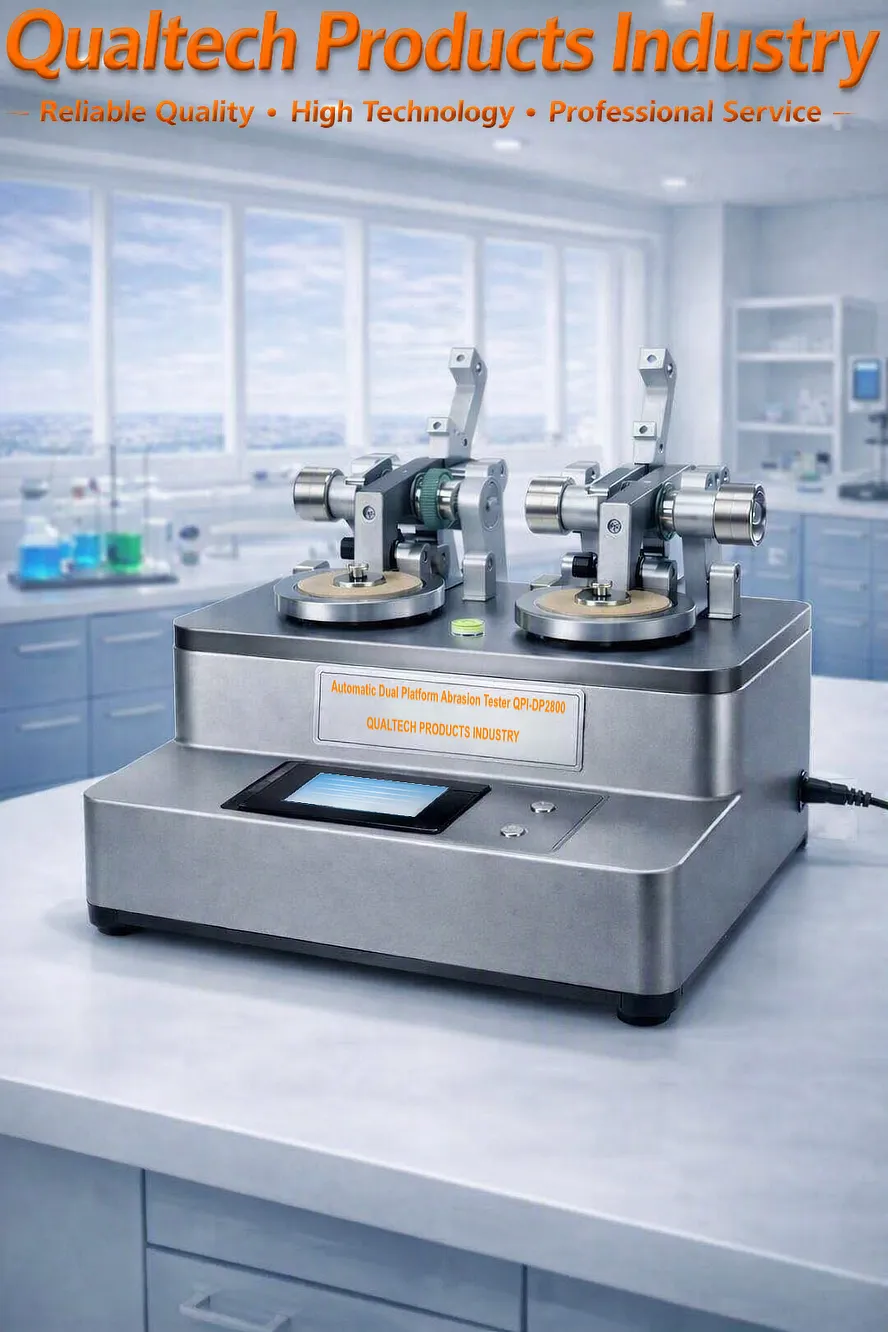
Automatic Dual‑Head Rotary Abrasion Tester QPI‑DP2800 - Application:
The professional Automatic Dual Head Rotary Abrasion Tester QPI‑DP2800 is engineered for high‑precision evaluation of surface durability, wear resistance, and coating integrity using standardized rotary abrasion procedures. The instrument performs controlled abrasion through two independently driven rotary heads, enabling simultaneous testing of identical or different specimens under identical load and speed conditions. This dual‑head configuration increases repeatability, reduces operator influence, and supports advanced comparative testing.
ASTM Test Method Description (Taber Abrasion – ASTM D4060 / ASTM D1044 / ASTM D3884)
ASTM rotary abrasion standards quantify the wear resistance of coatings, plastics, laminates, flooring materials, and industrial surfaces by measuring material loss after a defined number of abrasion cycles. The method simulates long‑term mechanical wear through controlled rotational friction.
Core ASTM Procedure Using QPI‑DP2800
Specimen Preparation
The test specimen is cut to the required ASTM dimensions.
The surface is cleaned and conditioned to remove dust, oils, or contaminants.
The specimen is mounted securely on the abrasion platform using the precision clamping system.
Wheel Selection
Abrasive wheels are selected according to the ASTM material category (e.g., CS‑10, CS‑17, H‑18, H‑22).
The QPI‑DP2800 supports rapid wheel exchange and dual‑head parallel testing.
Load Configuration
Standard ASTM loads (typically 250 g, 500 g, or 1000 g per wheel) are applied using calibrated weight assemblies.
The dual‑head system ensures identical loading on both test stations.
Rotational Abrasion Cycle
The test begins with the programmed number of cycles (e.g., 100, 500, 1000 cycles).
The specimen rotates beneath the abrasive wheels at a controlled speed defined by the ASTM method.
The wheels create a uniform wear path through continuous contact and friction.
Material Loss Measurement
After the cycle count is completed, the specimen is removed and cleaned.
Wear is quantified by:
Mass loss (mg)
Wear index
Visual surface degradation
The QPI‑DP2800’s dual‑head design allows direct comparison between two materials or two coatings under identical conditions.
ASTM Output
The ASTM method provides:
Wear Index (WI)
Mass loss per cycle
Visual wear classification
Comparative durability ranking
These results support quality control, R&D, and material certification.
ISO Test Method Description (ISO 5470‑1 – Rotary Abrasion)
ISO 5470‑1 defines a standardized procedure for evaluating the abrasion resistance of flexible and rigid materials using a rotary abrasion system. The method ensures global comparability of wear performance across coatings, polymers, textiles, and industrial surfaces.
Core ISO Procedure Using QPI‑DP2800
Specimen Conditioning
The specimen is conditioned under ISO‑specified temperature and humidity.
The QPI‑DP2800’s stable platform ensures uniform specimen alignment.
Abrasive Wheel Selection
ISO wheels (e.g., CS‑10, CS‑17, H‑18) are installed according to material type.
Dual‑head operation allows simultaneous ISO testing of two specimens.
Applied Load
ISO loads are applied using calibrated weight assemblies.
The instrument ensures precise vertical force distribution on both heads.
Abrasion Cycle Execution
The specimen rotates beneath the wheels at the ISO‑defined speed.
The abrasion heads apply continuous friction, producing a standardized wear track.
The QPI‑DP2800’s automatic cycle control ensures exact compliance with ISO cycle counts.
Wear Evaluation
After testing, the specimen is cleaned and evaluated.
ISO wear performance is determined by:
Mass loss
Thickness reduction
Surface appearance changes
ISO wear index calculations
ISO Output
ISO 5470‑1 provides:
Mass loss (mg)
Wear index
Surface degradation classification
Internationally comparable abrasion performance data
Why Engineers Prefer the QPI‑DP2800 for ASTM & ISO Abrasion Testing
Dual‑head parallel testing for high throughput
Precision speed control for strict ASTM/ISO compliance
Rapid wheel exchange system
Stable specimen platform for repeatable results
Automatic cycle counting and programmable test sequences
Ideal for coatings, plastics, flooring, automotive materials, aerospace surfaces, and industrial laminates
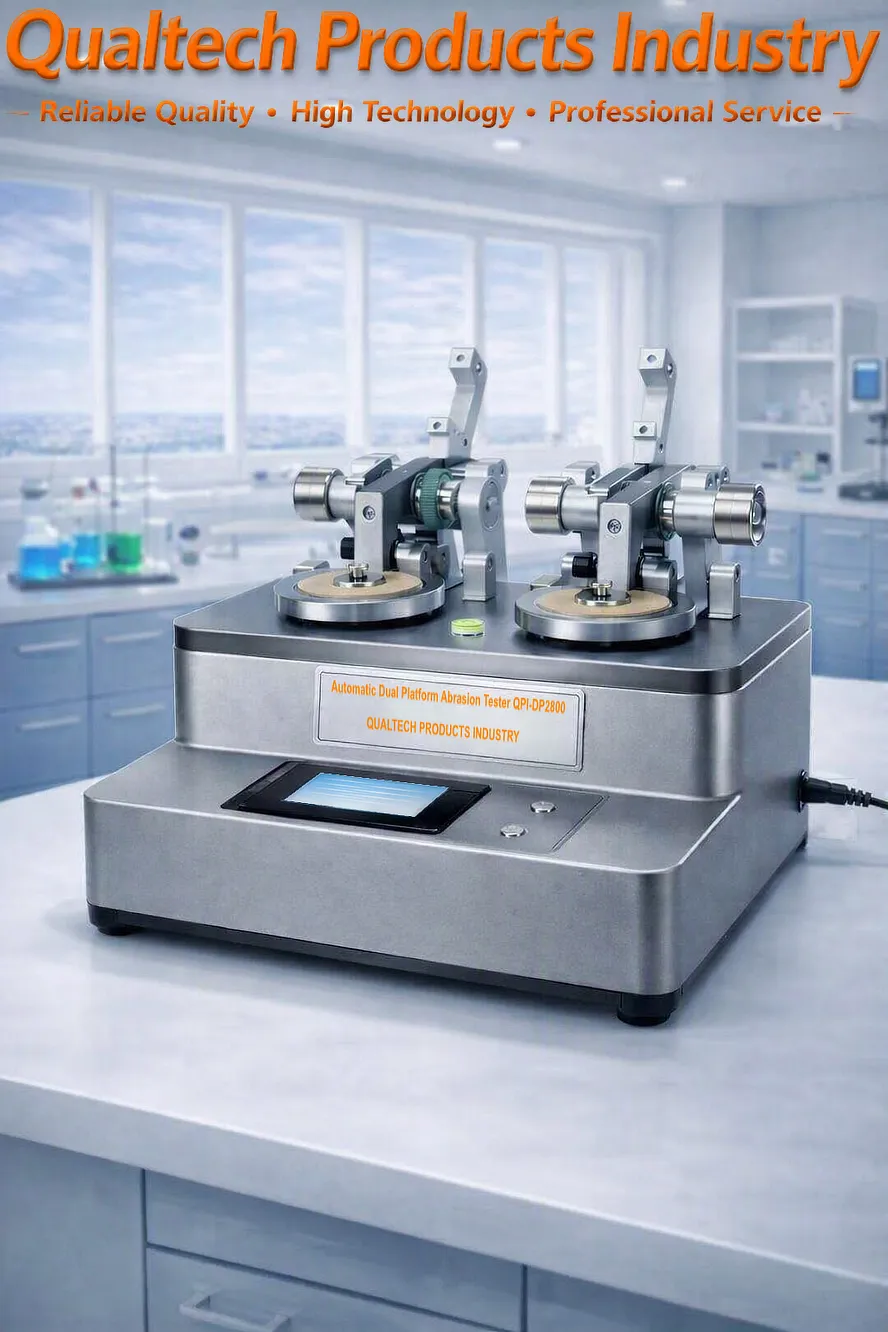
Dual Platform Rotary Abrasion Tester - Features:
- Newest Microchip Technology
- Large Color Touchscreen Display
- Instant Abrasion Resistance Test
- Advanced Sample Platform Constant Speed Technology
- Individual continuous Platform Speed Control - each Platform runs at its set speed
- Dual Platform System for simultaneous side-by-side testing of up to two samples
- Wide range of standardized & precision engineered Abrasion Wheels
- Wide range of precision engineered Test Loads
- Optional custom engineered Test Loads available
- Easy Sample Mount System
- Included Solid Sample Holder
- Optional Textile Sample Holder
- Easy Test Load Mount & Swap System
- Optional Vacuum System
- User-friendly Menu Navigation
- User-friendly Application
- User-friendly Sample Handling
- High Accuracy & High Precision
- Ergonomic Design & Reliable Performance
- Engineered in accordance with international test standards including ASTM C241, ASTM C501, ASTM D1044, ASTM C1353, ASTM D3884, ASTM D3389, ASTM D4060, ASTM D5034, ASTM D5035, ASTM D6037, ASTM D7255, ASTM F362, ASTM F510, ASTM F1478, ASTM F1978, ISO 3537, ISO 4586, ISO 5470, ISO 7784, ISO 7784, ISO 9352, ISO 10074, ISO 14656, ISO 24338, DIN 52347, DIN 53109, DIN 53754, DIN 53799, DIN 68861, AS/NZS 1580.403.2, AS/NZS 4266.2, BS 5599, ENV 13696, FORD BN108-02, GM 9515P, SAE J 1530, SAE J 1847, SAE J 365, SAE J 948, EN 13329, EN 13523-16, EN 14323, EN14327, EN14354, EN14431, EN 14688, EN 14864, EN 1504-2, EN 438-2, EN 660-2.
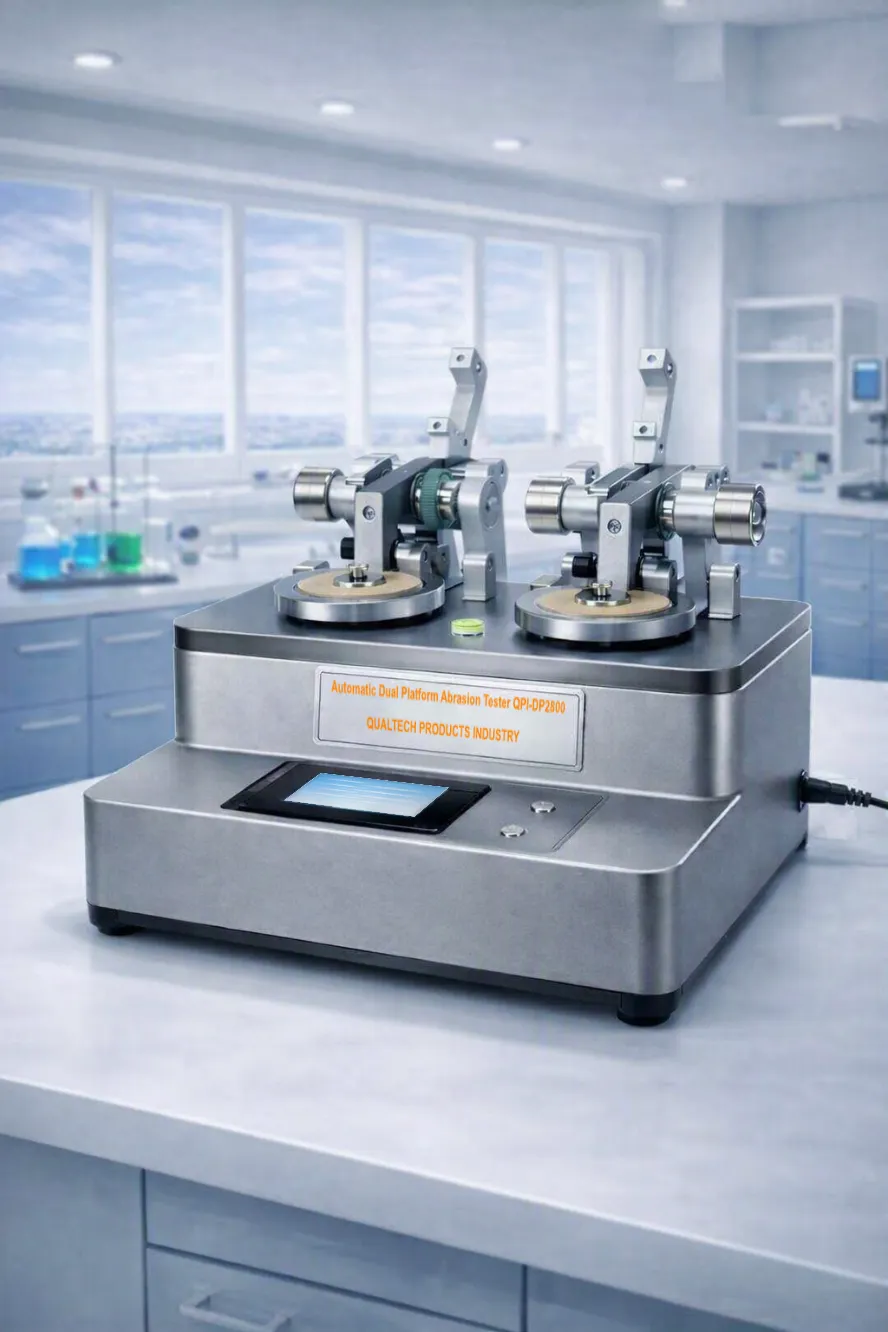
Automatic Dual Head Rotary Abrasion Tester - Specifications:
| Model | QPI-DH1800 | QPI-DH2800 |
|---|---|---|
| Newest Microchip Technology | Yes | Yes |
| Large Color LCD Display | Yes | Yes |
| Comfortable Softtouch Buttons | Yes | Yes |
| Instant Automatic Abrasion Resistance Test | Yes | Yes |
| Dual Sample Platform System | Yes | Yes |
| Simultaneously test two samples side-by-side | Yes | Yes |
| Test Specimen | Paint & Surface Coatings | Wood & Wooden Samples |
| Sample Speed | 60 RPM, 72 RPM & continuously adjustable via Color Touchscreen individually for each Platform | 60 RPM, 72 RPM & continuously adjustable via Color Touchscreen individually for each Platform |
| Carefully Calibrated Test Loads | 500g, 750g, 1000g | 500g, 750g, 1000g |
| Wide range of standardized and precision-engineered Abrasion Wheels | Yes | Yes |
| Optional custom engineered Abrasion Wheels available | Yes | Yes |
| Easy Sample Mount & Swap System | Yes | Yes |
| Included Solid Sample Holder | Yes | Yes |
| Optional Textile Sample Holder | Yes | Yes |
| Easy Abrasion Wheels Mount & Swap System | Yes | Yes |
| Easy Test Load Mount & Swap System | Yes | Yes |
| Advanced Sample Platform Constant Speed Technology | Yes | Yes |
| User-friendly Menu Navigation | Yes | Yes |
| User-friendly Application | Yes | Yes |
| User-friendly Sample Handling | Yes | Yes |
| High Accuracy & High Precision | Yes | Yes |
| Ergonomic Design & Reliable Performance | Yes | Yes |
| Voltage | 100VAC - 240VAC 50Hz/60Hz | 100VAC - 240VAC 50Hz/60Hz |
| Engineered in accordance with international test standards including ASTM D2486, ASTM D3450, ASTM D4213, ASTM D4752, ASTM D4828, ISO 11998, DIN 53778, BS 3900-F17, MIL-STD-1334 B, MIL-C-3004, MIL-C-46057, MIL-E-11237, MIL-P-15422 C | ||
Dual Platform Rotary Abrasion Tester – Included items:
- Automatic Dual Platform Rotary Abrasion Tester
- Included Abrasion Heads of your choosing 4PC
- Wide Range of Test Loads
- Counterbalance Test Loads
- Vacuum System
- Glass Panels
- Sample Mount
- Refacing Disks
- Accessories
- Quality Certificate
- Carefully Calibrated
- Calibration Certificate
- User manual
- Extended Warranty
Get information now on products, pricing, technical support and professional services.
One of our specialists will reply to your enquiry shortly. Alternatively contact us via the company details in the USA, in Australia or in the UK.














 English
 Danish
 Dutch
Dutch Finnish
 French
 German
 Greek
Greek Irish
Irish Italian
 Luxembourgish
 Norwegian
 Norwegian
 Portuguese
 Scottish Gaelic
 Spanish
 Welsh
Welsh